



Why Bengaluru projects stall before they start
Approvals, khata and the GBA transition are delaying projects by weeks to months in 2026. What to check before you design anything.
- Written by
- The MIYAAR studio
- Published
- Last reviewed
- Reading time
- 7 minutes
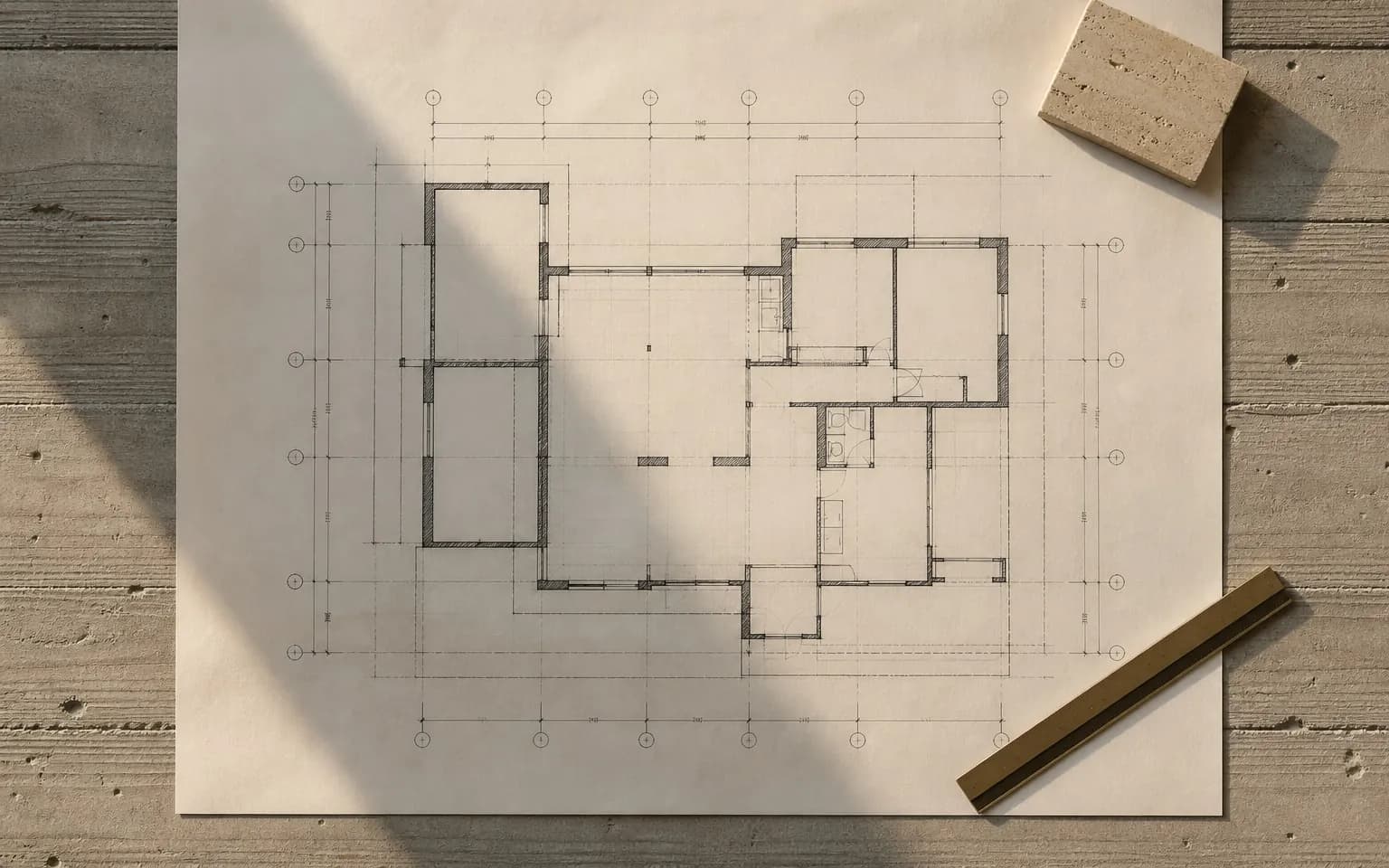
In 2026 the BBMP to Greater Bengaluru Authority transition has added roughly 4 to 16 weeks beyond historical norms to khata transfers, building plan approvals, SAS payments and Akrama-Sakrama applications. Most rejections trace to three avoidable causes: name mismatches between Aadhaar and sale deed, properties not upgraded to digital e-khata, and setback errors in the drawing.
The most expensive delay in a Bengaluru project usually happens before anyone breaks ground, and it rarely appears in the programme anyone was shown.
What changed in 2026
Bengaluru's civic administration is mid-transition from BBMP to the Greater Bengaluru Authority structure. Files are moving between jurisdictions, systems are being migrated, and approvals that once had a predictable rhythm now do not.
The measured impact is 4 to 16 weeks of additional delay across khata transfers, building approvals, tax payments and regularisation applications. Developers across the city are reporting that prolonged approval timelines are disrupting launches and adding cost.
For a homeowner, that is a season. For a project carrying finance or a rented alternative, it is money.
The three rejections that keep happening
1. The name does not match
The owner's name on the Aadhaar card does not exactly match the name on the sale deed. An initial expanded, a surname ordered differently, a spelling variant carried from an older document. It is trivially common and it stops an approval dead.
Check this before anything else. Correcting it is a process of its own, and doing it in parallel with design costs nothing while doing it afterwards costs months.
2. The property is not on digital e-khata
Properties still on older khata records need upgrading to digital e-khata before approvals will progress. Owners frequently assume their khata is current because they have paid tax on it.
3. The setbacks are wrong in the drawing
Setback calculation errors in the submitted plan are a routine cause of rejection and resubmission. This one is purely on the design side, and it is entirely preventable — which is precisely why it is worth asking who is responsible for corrections before you appoint anyone.
The jurisdiction question nobody asks first
Bengaluru is not one planning authority. Depending on the survey number, a plot may fall under BBMP or GBA, BDA, BMRDA, BIAAPA or a local panchayat. The approval route, the timeline, the fee structure and the eligible schemes differ between them.
On corridors like Sarjapur Road, jurisdiction can change over short distances. Assuming the wrong one and designing against it wastes months.
Confirm the authority before the first line is drawn, not after the first submission is rejected.
What to verify before design begins
- 01Which planning authority governs this specific survey number.
- 02Khata classification, and whether it is upgraded to digital e-khata.
- 03Exact name consistency across Aadhaar, sale deed and khata.
- 04Conversion order status if the land was ever agricultural.
- 05Approved-layout status, and whether the layout itself is regularised.
- 06Applicable FAR, setbacks and height limits for that authority and plot size.
- 07Whether the project is eligible for a simplified route such as Nambike Nakshe.
- 08Any airport-corridor height restriction, in the north of the city.
Every one of these is discoverable in weeks and expensive in months. None of them requires a designer to be appointed first.
Who should carry this
Approvals are the part of a project most often left ambiguous. The client assumes the architect is handling it, the architect assumes their scope ended at the drawing, and nobody is actually chasing the file.
Decide explicitly, in writing, before appointment: who prepares the submission, who submits it, who responds to queries, who bears the cost of corrections, and who is accountable for the timeline. Applications are made in the owner's name regardless — but sequencing and chasing should belong to someone by name.
Timelines and processes in this article reflect the position in Bengaluru as at August 2026 and are changing as the GBA transition progresses. Verify current requirements with the relevant authority before acting.
Questions this raises