
Before the floor plan: what a meaningful Life Brief should uncover
How routines, privacy, relationships and future change become useful design intelligence rather than a wish list.
- Written by
- The MIYAAR studio
- Published
- Last reviewed
- Reading time
- 7 minutes
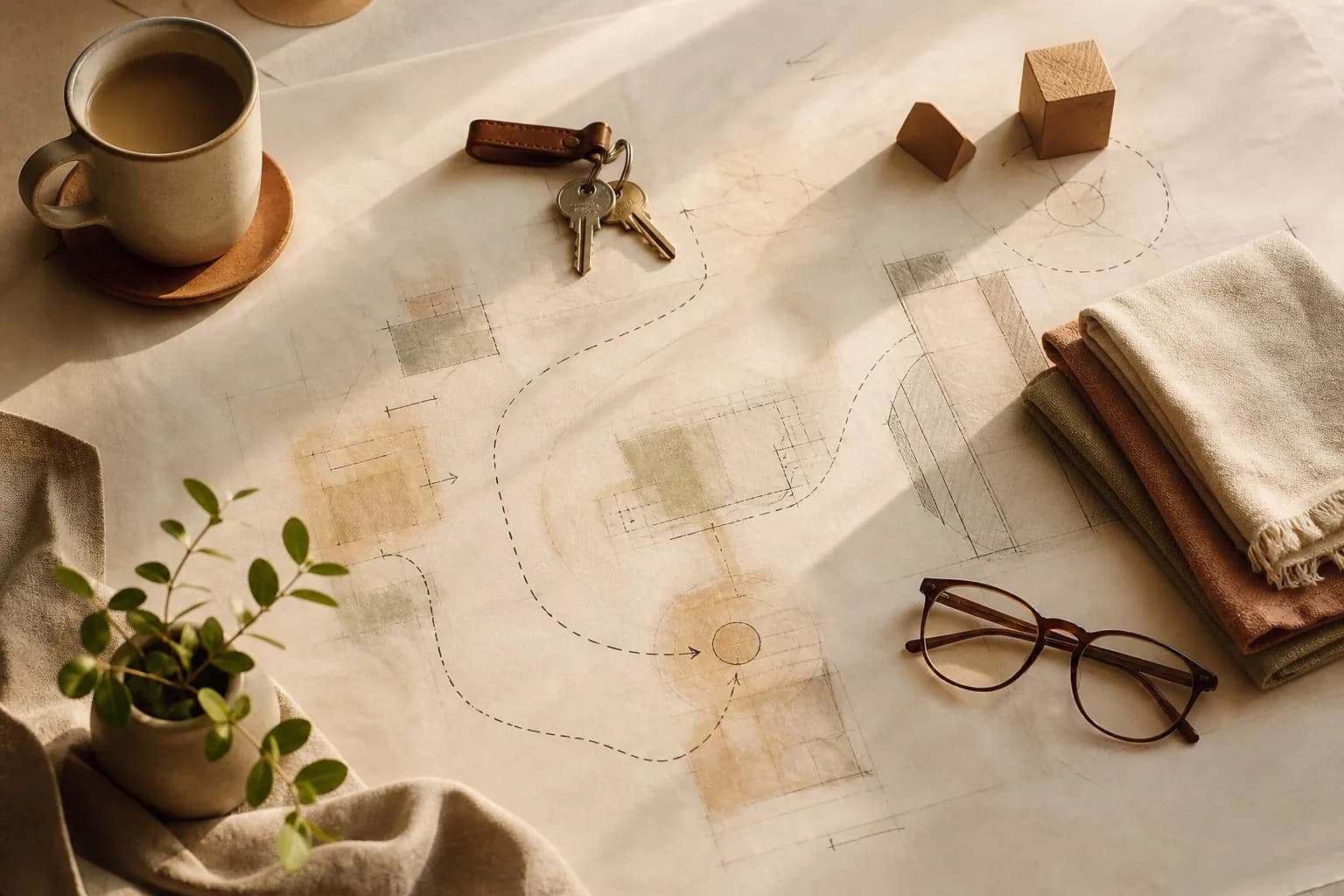
A Life Brief documents how a household actually lives — routines, thresholds, hosting patterns, privacy needs and likely change over a decade — rather than what rooms they want. A brief that lists rooms produces a house that lists rooms. A brief that describes life produces a house that fits one.
Most residential briefs are written as an inventory. Five bedrooms, a home theatre, a puja room, a bar, a gym, staff quarters, parking for four. Every item is real and none of it says anything about the people involved.
The inventory is not useless — it establishes scale and therefore cost. But it cannot tell an architect where the house should be generous and where it should be tight, which is the decision that determines whether it feels right.
The eight questions that actually matter
1. Walk me through a Tuesday
Not a weekend, not a festival. An ordinary Tuesday, hour by hour, for every person in the house. Ordinary days are 250 of the year and they are the ones nobody designs for.
2. Where do people end up that they were not supposed to?
Every household has a room that is used for something other than its label, and a corner where people gather despite there being nowhere to sit. These are the most valuable data points in the entire brief, because they describe behaviour rather than intention.
3. Who needs to be alone, and when?
Privacy in Indian homes is rarely about doors. It is about acoustic separation, sightlines, and the ability to be unobserved without appearing to withdraw. Multi-generational households make this the single hardest problem in the plan.
4. How do you host, honestly?
Twelve people for dinner four times a year is a different building from forty people standing twice a month. Clients routinely brief for the entertaining they aspire to rather than the entertaining they do, and then live daily in a house shaped by an occasional event.
5. What did you dislike about every home you have lived in?
Negative briefs are more reliable than positive ones. People are far more accurate about what irritated them than about what they want.
6. Who else will live here in ten years?
Ageing parents, returning children, staff, a home office that becomes permanent. A ground-floor bedroom that is a guest room today may be the only viable bedroom in fifteen years.
7. What are you willing to be overruled on?
Asked early and honestly, this question prevents most late-stage conflict. It also reveals which decisions are genuinely load-bearing for each person.
8. What would make this project a failure?
Almost nobody is asked this. The answers are usually about process — being kept in the dark, being surprised by cost, feeling unheard — rather than about architecture at all.
What the brief becomes
The output is not a document that sits in a drawer. It is the reference that every subsequent decision is tested against. When a design option is proposed at M2 or a substitution is requested at M6, the question is the same: does this still serve what we documented?
A brief you cannot be held to is not a brief. It is a wish list with a cover page.
Questions this raises