
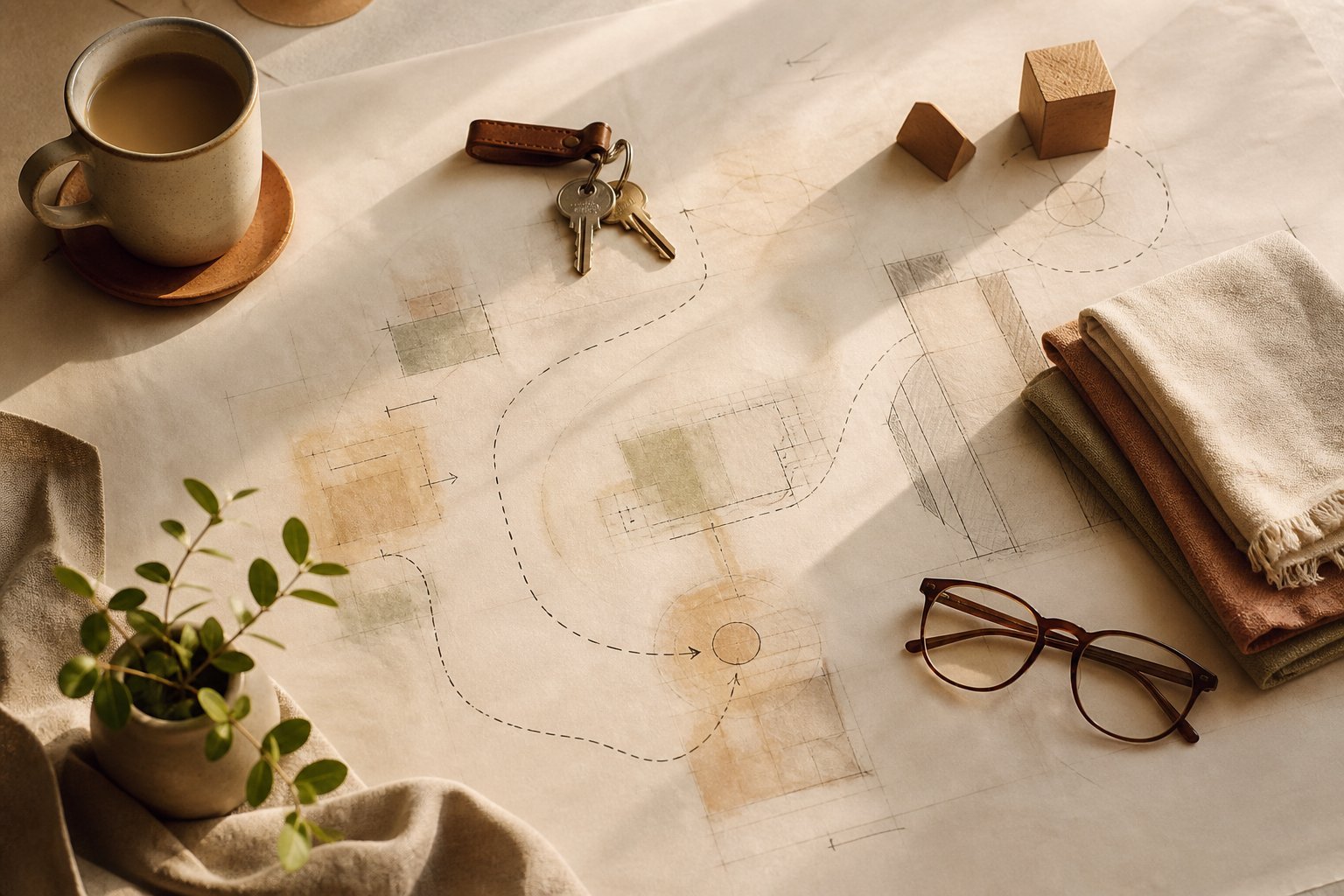
A room list tells an architect what must fit. A Life Brief explains what the home must make possible.
Begin with time, not style
How does the day begin? Who wakes first? Where does work happen? When does the family gather, and when does someone need quiet? Time reveals relationships between rooms more usefully than a collection of visual references.
Map togetherness and privacy
A multi-generational home can value closeness while still requiring autonomy. Guests may be frequent but should not interrupt private routines. Staff and service movement may need discretion without creating poor working conditions. These are architectural questions about thresholds, circulation and acoustic separation.
The strongest brief does not ask only what a client likes. It uncovers what the space must quietly do every day.
Design for change
Children grow, parents age, work patterns shift and collections expand. Not every future can be predicted, but sensible structure, adaptable rooms, accessible movement and maintainable systems prevent expensive rigidity.
Turn insight into a decision
Discovery matters only when it changes the design. A morning ritual can affect orientation and light. Frequent hosting can reshape kitchen workflow. A desire for calm can reduce visual circulation, material noise and unnecessary choices. Each insight should have a traceable spatial response.
What should feel effortless here? What deserves privacy? What changes in ten years? What objects carry meaning? What would make the finished home feel unmistakably yours?