
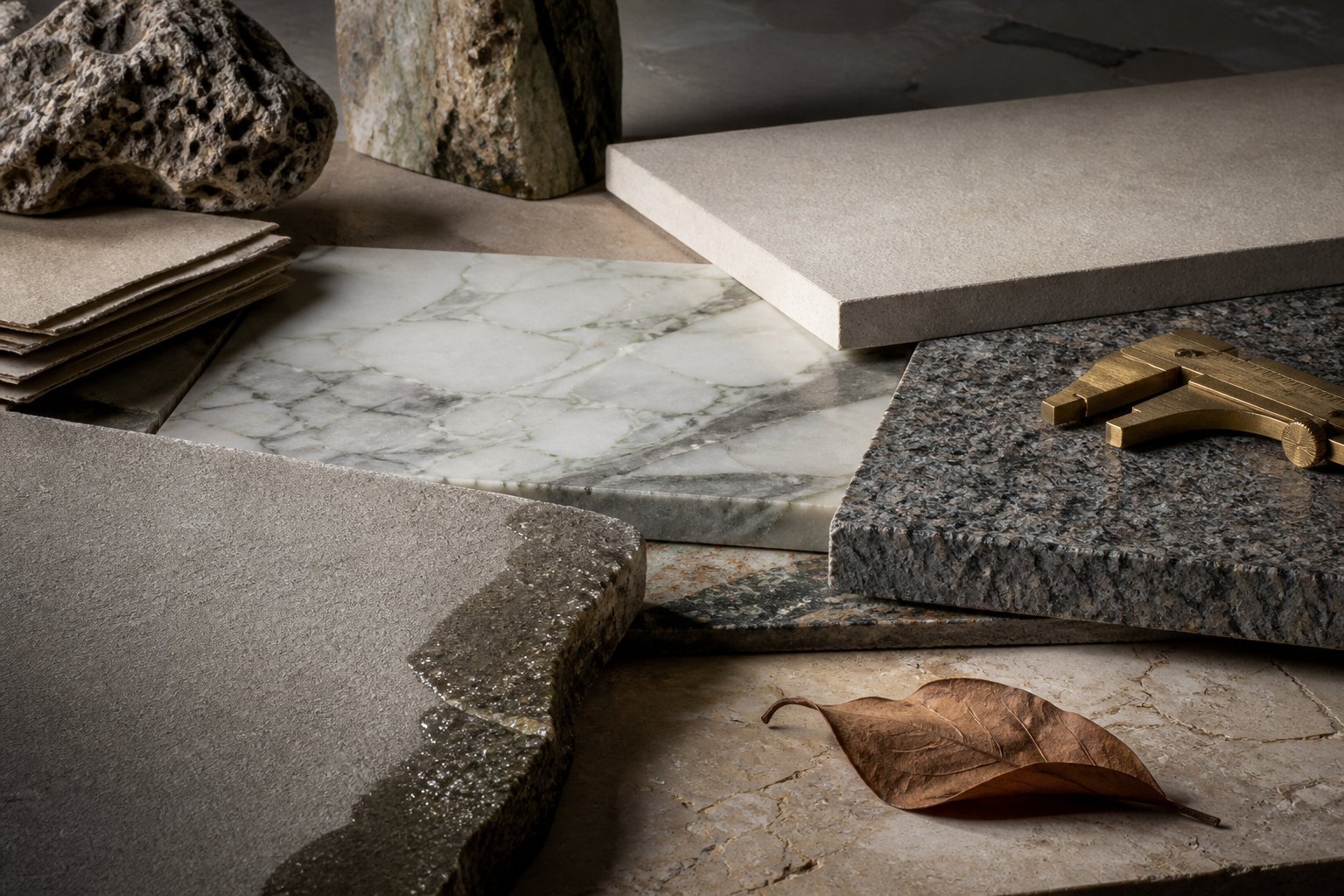
Natural stone is not a colour swatch. It is a geological material with variation, porosity, strength and a future patina.
Start with application
A stone suitable for a quiet internal wall may be inappropriate for a wet floor, kitchen counter, pool edge or exposed façade. Traffic, water, heat, slip resistance, staining and cleaning should narrow the selection before appearance does.
Understand finish
Polished, honed, leathered, brushed and flamed surfaces change reflection, grip, colour depth and maintenance. The same stone can behave and feel very differently after finishing. Review a sufficiently large sample in the intended light.
Variation is part of the material
Small samples cannot represent an entire batch. Slabs should be dry-laid or digitally mapped where pattern continuity matters. Agree on acceptable tonal and veining variation before cutting begins.
Material integrity means selecting stone for the place it will live—not simply for the impression it creates in a showroom.
Detail the edges and joints
Thickness, substrate, joint width, corner strategy, movement joints, drainage and adjacent materials determine whether stone feels resolved. A premium slab cannot compensate for a careless junction.
Plan for care
Ask what sealing is required, how often it should be renewed, which cleaners are safe and whether local repair is practical. Patina can be beautiful when anticipated; neglect looks different.
Confirm species, source, batch, finish, thickness, application, fixing method, sealing, maintenance, wastage, replacement stock and an approved benchmark sample.